We use cookies where necessary to allow us to understand how people interact with our website and content, so that we can continue to improve our service.
We only ever receive anonymous information, and cannot track you across other websites. View our privacy policy

How did Gibraltar vote in the 2016 Referendum?
Gibraltar voted overwhelmingly in favour of remaining in the EU. In total, 96% of votes cast on the Rock were for staying within the bloc. During the campaign there were concerns that leaving the EU would reignite Spanish claims of sovereignty over the British overseas territory.
Britain has had sovereignty of the Rock since 1713 as part of the Treaty of Utrecht. The most recent referendum on Gibraltar’s sovereignty was held in 2002 and almost 99% of voters chose to remain solely British, resoundingly rejecting suggestions that Spain and the UK should share sovereignty.
What is the UK-EU Gibraltar deal?
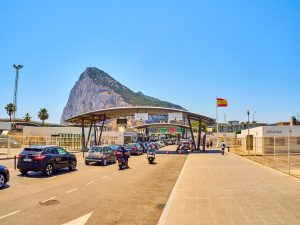
The UK-EU Gibraltar deal has been agreed in the wake of Brexit, to remove physical barriers at the land border with Spain. It brings “fluidity for people and goods crossing the Spain-Gibraltar border”, the UK Government has said. Gibraltar had been left out of the UK-EU Trade and Cooperation agreement (TCA) after Brexit, creating a land border for the roughly 15,000 workers who cross the Spain and Gibraltar border every day.
When did the deal come into effect?
The UK and the EU agreed a deal on the future of Gibraltar on July 11, 2025. At the time of the deal, the then-Foreign Secretary David Lammy MP praised the agreement for protecting the UK’s sovereignty inGibraltar and improving the Rock’s economy.
The UK-EU deal on Gibraltar came into effect four days later, on July 15, 2026. At midnight, people in Spain and Gibraltar celebrated the end to border checks for residents, tourists, workers, and goods. The deal meant that the border fence which separated Gibraltar and Spain since 1908 had been removed.
Do the people of Gibraltar support the deal?
The deal has cross-party support in Gibraltar. Speaking after a recent visit to the territory ahead of a Westminster Hall debate on the deal, veteran Tory MP Martin Vickers stressed:
“[The deal] has cross-party support in Gibraltar, and it would therefore be regrettable, if that was not represented here at Westminster. We should congratulate both our part of the negotiating team and the First Minister in Gibraltar who have worked tirelessly to achieve this treaty.”
What has changed now the UK-EU Gibraltar deal has come into effect?
The deal sees Gibraltar establish a customs union with the EU and remain connected to the Schengen Area. Aligning with the EU customs union eliminates all customs duties on goods passing between Gibraltar and Spain. UK-origin goods will need to satisfy TCA rules of origin, otherwise they will be subject to the EU common external tariff – which will also be levied on goods from other countries outside the EU-Gibraltar customs union.
In addition, goods sold in Gibraltar must now comply with EU regulations. This enables goods to pass through the border without needing to be checked. The Schengen Area is the largest border-free travel zone in the world: it allows individuals to move across borders without the need for passport checks or other immigration controls. By linking to the Schengen area, people can now pass freely across the Spain and Gibraltar border, with entry and exit checks moving to Gibraltar’s airport and port.
Will the new deal help Gibraltar’s economy?
The new arrangements remove many of the trade barriers which have hampered Gibraltar’s economy since Brexit. It is hoped that their removal will lead to economic growth, both for the Rock and for the bordering southern Andalusian region of Spain, which experiences persistent issues of high unemployment.
For Gibraltar, the benefits are hugely significant. First Minister Fabian Picardo has stated that the new deal could see the Gibraltan economy grow by an estimated £200 million a year, which is roughly 6% of the overseas territory’s GDP.
What’s more, the deal is vitally important for unlocking the trade that both sides of the border need to grow and prosper. Across the Spanish border, Juan France, the mayor of nearby town La Línea de la Concepción, said: “This is something historic… you have to realise that for an average company in this town a third of its income is from clients in Gibraltar.”