We use cookies where necessary to allow us to understand how people interact with our website and content, so that we can continue to improve our service.
We only ever receive anonymous information, and cannot track you across other websites. View our privacy policy

The UK could rejoin the European Union (EU) within a single Parliament, and complete negotiations in less time than it took for the UK to agree its trade deal with India, experts have established.
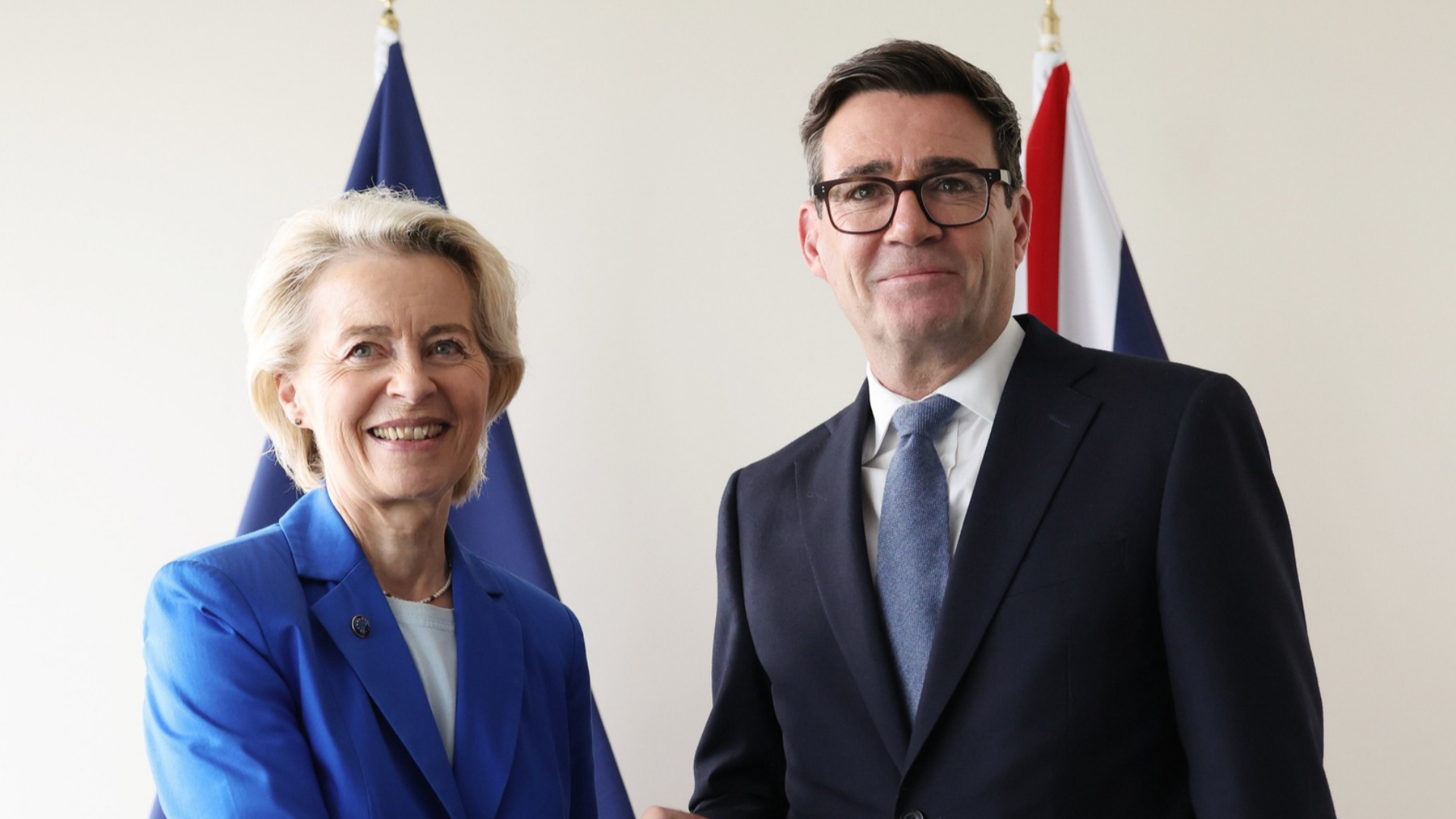
A Prime Minister who chooses to pursue EU membership could restore the UK’s place at the heart of Europe during the course of just one Parliament, a new Best for Britain analysis of the practicalities of rejoining has demonstrated.
The study, titled ‘How the UK joins the EU, and how long it would take’, sets out that, given Finland formally acceded to EU member status in under three years from application, claims that it would take the UK a decade are overblown – and not supported by precedent.
What’s more, Finland’s accession negotiations were even quicker, taking around 13 months – less time than the UK’s trade talks with New Zealand (20 months) and India (40 months) – the study highlights. The Nordic nation first applied to join in March 1992 and became a full member in January 1995, indicating that the “process can be far quicker when there is a high degree of existing alignment and strong political will”, it concludes.
It comes just days after the European Commission announced measures to prepare the bloc for upcoming new member states, including future accession treaty safeguards and outlining “indicative roadmaps” for Montenegro, Albania, Moldova and Ukraine. Commenting on the measures, Commission President Ursula von der Leyen described growing the EU as a “geopolitical imperative” and stressed that “Europe’s future depends on the choices we make today”.
Expert evaluation outlines the step-by-step the process the UK would follow to rejoin the EU, and highlights that EU membership “has much to recommend it on procedural grounds”. It is a “well-trodden” route, with 22 countries – the UK included – having acceded to the EU using a similar process , versus just three who have secured a bespoke Customs Union with the trading bloc, or three who have negotiated access to the EU’s Single Market, via the EFTA.
Further key findings include:
- Under Article 49, the EU must consider any membership application from a qualifying European country – including the UK – whereas no such obligation applies to a Customs Union, or the UK’s current sector-by-sector approach,
- Shared values; limited regulatory divergence since 2020; and the current deals (especially food and drink, emissions trading and the electricity market) are set to ease the UK’s path,
- New EU member states are not required to join the Eurozone or Schengen area automatically upon entry,
- Six member states have not joined the Euro, and entering the ‘ERM II’ exchange-rate mechanism, currency union precondition, is voluntary. Sweden, Czechia, Poland and others have all chosen not to join ERM II,
- The Common Travel Area, and the UK and EU’s shared commitment to avoid a hard border on the island of Ireland, present a strong case for the UK to have the same arrangement as Ireland, which remains outside the Schengen Area,
- Referendums are not a precondition to opening accession talks, with 11 of the 13 countries who have joined the EU since 2004 holding one to ratify the final deal,
- The UK would likely not be eligible for ‘associate membership’ as offered to Canada, and the concept has no legal basis yet – so would not represent a shortcut.
The fresh assessment of the process and practicalities builds on the well-documented economic and political case for the UK to restore its full EU membership. It comes after independent econometric research by Frontier Economics projected the transformational £92bn GDP boost on offer from membership – at the very least.
While a YouGov megapoll commissioned by Best for Britain underlined that pledging to renew the UK’s EU member status is the only route to put the Labour Party within touching distance of forming a majority government at the next general election.
Oliver Nicholls, Senior Policy Manager at Best for Britain and lead author of the report, said:
“The idea that rejoining the EU would take the UK a decade is a myth, and the evidence in this report proves it: Finland went from application to full membership in less time than it took us to negotiate and sign a trade deal with India.
“No country has ever walked this path as a former member, already closely aligned and sharing the EU’s values. The process is rigorous, but it is well trodden and predictable, and with the political will, Britain could be back at the table within a single Parliament.
“As the Prime Minister weighs up what is doable, he must look at the facts, not be put off by the folklore.”
Sir Jonathan Faull, former Director-General at the European Commission, said:
“Accession to the European Union is a particularly complex negotiation. A candidate must demonstrate, chapter by chapter, that it can take on the full obligations of membership. That rigour is precisely what gives it legitimacy.
“The United Kingdom would come to that process in an unusual position: a former member state whose laws, institutions and administrative practice still bear the imprint of decades of membership. That would not remove the need for careful preparation or for unanimous agreement among the member states. The timetable would depend on the clarity and constancy of political will on both sides.
“This report is a sober and useful contribution to a debate that has too often been conducted on the basis of assumptions rather than evidence.”
Sandro Gozi MEP, Chair of the European Parliament’s Delegation of the UK-EU Parliamentary Partnership Assembly (PPA), said:
“When countries are already closely aligned to EU rules, such as was the case for Sweden and Finland, the process for accession is faster than for applicants essentially starting from scratch.
“As a former member, and with much of the regulatory framework already in place, I personally do not see any serious reason why an application from the UK would not be achievable within one parliament”.