We use cookies where necessary to allow us to understand how people interact with our website and content, so that we can continue to improve our service.
We only ever receive anonymous information, and cannot track you across other websites. View our privacy policy

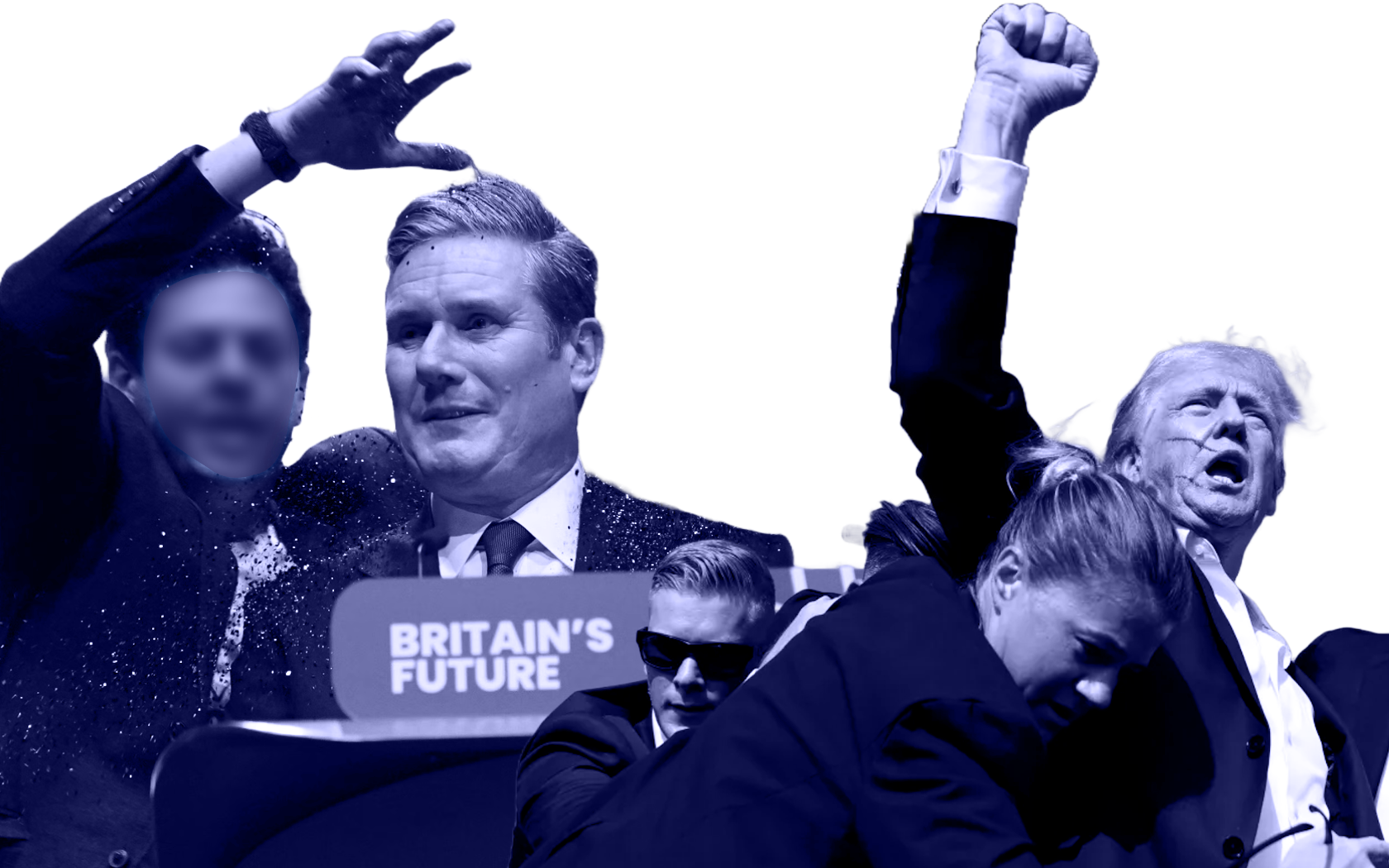
The assassination attempt on Trump this weekend has taken over the news. Violence has become a horrifying norm in the US – a nation where there are an estimated 120 guns per 100 people, and children practice hiding from gunmen in their classrooms. Despite this, seeing those same weapons turned on political figures remains deeply shocking. The man who once incited an armed mob to disrupt the transfer of power now finds himself a victim of violence.
Political violence, from any quarter, is unacceptable. The routine nature of such violence signals a dangerous shift in societal norms not just in the US but in the UK also. Just last week, the election of the Speaker of the House of Commons displayed an unusual unity. Commentators lauded Rishi Sunak’s statesmanlike demeanour when speaking for the first time as Leader of the Opposition, but such harmony feels rare in today’s divisive climate. Where was this cooperative spirit before? It’s a stark contrast to the heated discourse of the election campaign.
Sir Lindsay Hoyle, the Speaker of the House of Commons, is kept awake at night by security concerns, a reflection of the grim reality politicians face. Despite measures to enhance safety, including a £31 million package for MPs’ security, the spectre of violence looms large. The deaths of Jo Cox and Sir David Amess, are sobering examples of what can happen when the pattern of violence against public officials reaches its apex.
Political violence is a spectre that hangs over politicians’ public appearances. During party conference speeches, figures like Theresa May and Sir Keir Starmer were the victims of stunts which, while ultimately benign, demonstrated the vulnerability of even the most guarded politicians.
The recent election campaign was marred by numerous incidents: Jess Phillips was shouted down during her victory speech, Jonathan Ashworth sought sanctuary in a church, Shabana Mahmood was targeted by a masked man, Luke Akehurst was besieged by 40 activists, and a window was smashed at Stella Creasy’s office. Even Nigel Farage, under the protection of a private security team, wasn’t spared, being famously targeted by a milkshake.
Farage’s observation that it’s ‘astonishing more MPs aren’t attacked’ underscores the toxic narrative that has taken hold. This deeply personal and unpleasant environment discourages public service, endangers those who dare to stand for office and comes with a cooling effect on democracy.
The UK government’s adviser on political violence highlights the growth of a “toxic, dangerous environment” in public life. This environment not only raises the risk of assassination attempts but also normalises intimidation as an electoral strategy. Aggressive tactics, particularly from certain activist groups, aim to bully candidates into submission or defeat. Measures like the UK’s security package for MPs are crucial, but they merely treat the symptoms, not the underlying disease.
The normalisation of political violence and the erosion of the middle ground are dire threats to democracy. We must remember that democracy thrives on the ability to debate, disagree, and compromise without resorting to violence.
To reclaim the middle ground and safeguard our democratic processes, we must foster a culture of respect and tolerance. It’s not just about protecting our politicians, it’s about protecting the very fabric of our democratic society. The path we’re on leads to a place where violent extremism overshadows reasoned discourse, and that’s a destination we must collectively strive to avoid.
Elsie Gisslegård / Content Executive, Best for Britain